by Katelyn Chacon
Life in the Highland Plantation

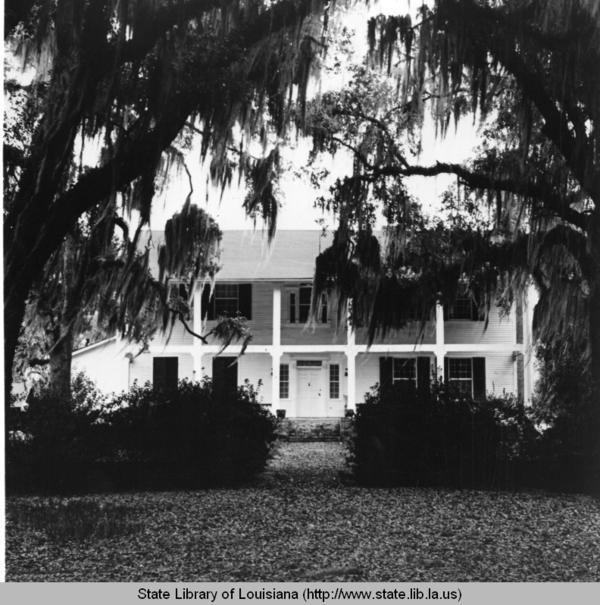
Bennet H. Barrow was the owner of the Highland Plantation during the years of 1833-1846. During those years he documented his time there in a diary. His diary provides a strong primary source from the perspective of an enslaver. Even though it provides a lot of information, it remains limited in conveying the enslaved person’s perspective. The diary of Barrow includes financial transactions, family matters, incidents with slaves, and the state of the plantation. Barrow prided himself on being a good slaveholder. He would mention giving slaves holidays or not having an overseer to make it seem as though he cared and nurtured his slaves. Even though Barrow portrays himself as not too harsh, enslaved people still faced abuse whenever their actions failed to meet his expectations. For example, when work was not being completed fast enough, Barrow would whip his slaves to “encourage” them to work harder. In Barrow’s diary he mentions encounters with runaway slaves that reveal certain aspects of slave life relating to their relationships. Bennet Barrow’s diary challenges the narrative that enslaved people lived in isolation by revealing that they were able to build connections throughout the plantation network of Louisiana in order to form relationships, rebel, or run away from their enslavers.
Runaway Slave Statistics

To examine the connections between runaway slaves and different plantations around the St. Francisville area of Louisiana, the number of runaway slaves recorded during the years of 1840 and 1841 were analyzed. According to the research, between 34 and 72 slaves were found to be runaways according to Bennet H. Barrow’s diary. This range is due to the lack of precise numerical data because in most cases, Barrow broadly states he saw or was looking for runaways without specifying exact numbers. This number is large when compared to the average number of slaves large plantation owners had. Large plantation owners had about 50-100 slaves working in their plantations. So for about 34-72 slaves to run away from their plantations is an indication that many slaves resisted the institution of slavery. Out of these runaway slaves, about 9-12 were found to be slaves of Barrow. These statistics were gathered through Barrow’s recordings of slaves he stated ran away from his plantation. Although Barrow claimed that he would punish or kill them if they returned, most were never found. A majority of the slaves mentioned were from M. Courtney’s plantation. His plantation accounted for 10-22 of the runaway slaves. Robert H. Barrow’s plantation, the brother of Bennet H. Barrow, had 4-10 runaway slaves mentioned. On the plantation of Captain Howell, 3-13 slaves were runaways. Some of the slaves that accounted for Captain Howell’s runaways on the plantation were unknown to be runaways or sent to Bennet’s plantation by Captain Howell. The other number, 4-7 of runaways, were a mixture of other plantation owners in the area, including those owned by Wades and Ruffin. In conclusion, enslaved people from multiple plantations escaped their enslavers’ harsh treatment, despite the risks of punishment in an attempt for a moment of freedom.
Barrow also recorded his personal encounter with runaway slaves on the Highland Plantation. He caught 3 of Captain Howell’s runaway slaves. Additionally, he found 3-6 more of Howell’s slaves, though it is unclear if they were runaways or not. Then, he found some of Robert H. Barrow’s and Wade’s runaway slaves together at his plantation in one instance. There was also one instance where Bennet H. Barrow found a runaway slave at Robert H. Barrow’s plantation. The runaway slaves had different objectives in their venture away from the plantation.
Actions of Runaway Slaves

In Louisiana, slaves had many opportunities to run away from their enslavers’ plantations and try to gain their freedom, even if it was just for a moment. One option they had was to run and hide in a city, also known as urban marronage. Those who did, attempted to be seen as free people of color and hid among the many that were there. Some would even forge passes or other documentation that would make them “legally” free. Without this they were more at risk of being caught as runaway slaves. Another option they had was to hide or join a community in the swamps, this was also known as swamp marronage. Swamp marronage was popular among runaway slaves in Louisiana due to the environment. Slaves would build their own hideaway communities that would allow them to provide for themselves, socialize with one another, and have freedom away from their enslavers. Some runaway slaves only wanted freedom temporarily, whether it was to visit family members in other plantations or to have a break from the harsh labor they were forced to endure. Other slaves would run away just to show resistance to slaveholders. This resistance could be setting fire to a slaveholder’s building, killing a slaveholder’s livestock, or stealing supplies and crops of slaveholders. Although some slaves were brave enough to take these risks to escape the life of slavery in Louisiana, they were not without consequences. Those who were caught after escaping risked being punished physically by being whipped, shot, or even killed. Despite these risks, slaves would still attempt to escape their enslaver to build relationships, escape the harsh labor, or even rebel.
Relationships of Runaway Slaves
Of the runaways Barrow mentions in his diary, we see many of these efforts to escape from a variety of slaves from different plantations. The runaway slave found at Robert H. Barrow’s plantation was one of Bennet Barrow’s slaves, John. John was at Robert Barrow’s plantation visiting other slaves. This reveals a relationship between Robert and Bennet’s slaves. As Bennet Barrow revealed in his diary, the two slaveholders would allow their slaves to spend some time together and create relationships by coming together in Robert Barrow’s plantation for preaching. Therefore, it can be inferred that many relationships between slaves formed between the Barrows’ plantations. Correspondingly, two of Captain Howell’s runaway slaves were discovered on Bennet Barrow’s plantation. They were said to be finely dressed and visiting another slave on the plantations. Although Howell and Barrow did not have a great relationship, their slaves still found a way to connect and form relationships with each other. These relationships among slaves from different plantations show that, despite being separated, they found ways to communicate, connect, and build strong relationships.
Resistance of Runaway Slaves

However, even though there were relationships between slaves forming throughout these different plantations, some runaway slaves attempted to show resistance. For example, a few of Barrow’s slaves killed a hog in an attempt to show their defiance of being staked or whipped. Afterwards, one responsible tried to run away, but was caught before he could get to a safe place. Another incident was when some of Barrow’s runaways were accused of planning an insurrection. This shows how some slaves attempted to plan and organize a rebellion together. Some slaves even attempted to rebel against other slaveholders that weren’t their own. Bennet Barrow saw a few of Robert Barrow’s runaway slaves that killed one of Bennet Barrow’s cows. Likewise, some of Captain Howell’s slaves went to Bennet Barrow’s plantation to steal some of his cotton. It is unknown, due to lack of explanation, if these slaves were runaways or if they were sent by Captain Howell. But nonetheless, they link Captain Howell’s plantation to Bennet Barrow’s plantation. These occurrences reveal how runaway slaves would use their temporary freedom to resist against the enslavers in Louisiana. In Barrow’s diary, there was a mention of a young, runaway slave who was believed to be a part of a marronage. He was sent to Robert Barrow’s plantation to steal some supplies, but was seized by Bennet and Robert Barrow. In his capture, the boy betrayed the runaways who sent him to gather supplies by informing the Barrows who and where the other runaways were. This instance not only reveals the relationships between slaves, but how the slaves strategized together to form a successful marronage. Additionally, a runaway slave was unsuccessful in scamming their slaveholders in sending them money by using the name of another respected person in the community. Ultimately, runaway slaves typically had their own agendas for running away, whether that was to escape, visit, or rebel.
Conclusion
In conclusion, slaves among plantations in Louisiana created an interconnected web of connections that assisted them in forming relationships, rebel, or run away. They found ways to make connections through their circumstances. In these relations they found companionship, friends, and enemies. They were able to communicate with each other to make plans to rebel or run away together. Slave’s relationships were a lot more complicated than just the social circle of the plantation they were on.
Sources:
References
- Barrow, B. H. (n.d.). Bennet H. Barrow’s Diary.
Images
- Louisiana; State Library of Louisiana. https://theclio.com/entry/92904
- Highland Plantation in the 1970s. Louisiana; State Library of Louisiana. https://64parishes.org/entry/highland-plantation
- Cronin, D. E. (Artist). (1888). Fugitive Slaves in the Dismal Swamp. Virginia. https://en.wikipedia.org/wiki/Great_Dismal_Swamp_maroons
- (1831). Burning of the Roehampton Estate during the Baptist War, a slave revolt initiated in Jamaica on Christmas Day. https://www.aaihs.org/christmas-and-resistance-to-slavery-in-the-americas/
 Slavery in Baton Rouge