By Melissa Mahlasera
Purpose of Formerly Enslaved Narratives
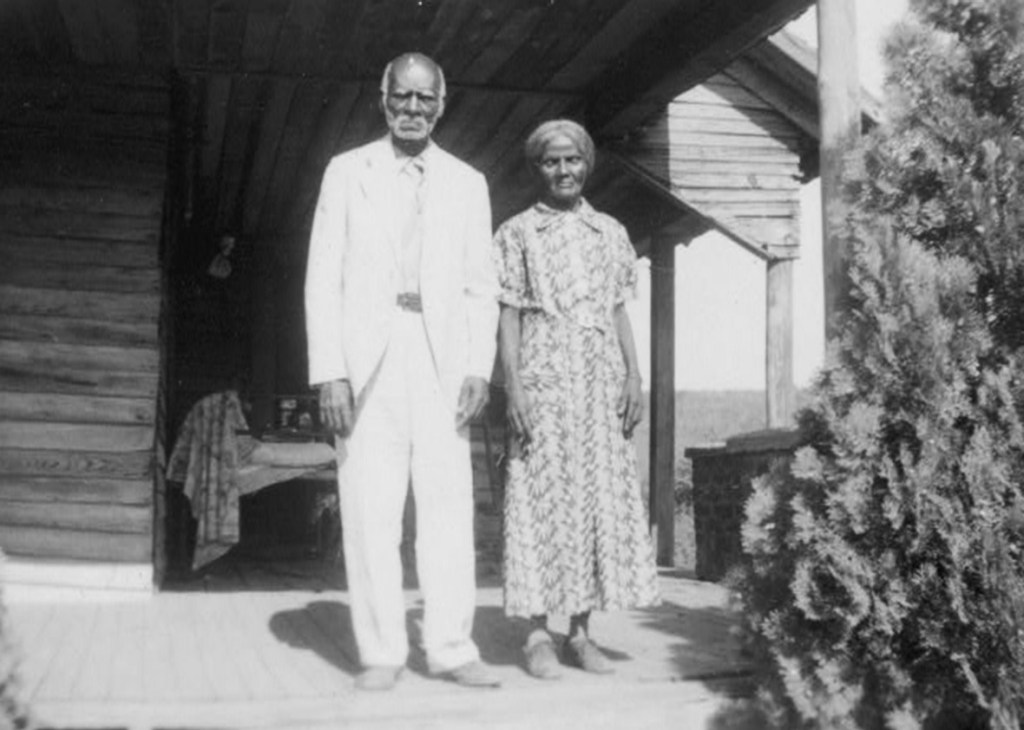
The stories surrounding former enslaved Black men and women tend to be overlooked when discussing the legacy and impact of slavery. Most times, in public history, slavery is taught and understood from a structural, institutional manner, rather than considering the unique and individual experience of those who were oppressed. This forms an inaccurate image of the enslaved. It created an ideology that enslaved people had no voice by reducing their existence to mere commodities. Therefore, to dispel this negative common notion, it is vital to acknowledge their voices through the various narratives where they speak out about what they went through. This will allow us to build a greater understanding of how their experience was rooted in the economic-driven system that accentuated inequality.
Particularly in Louisiana, where its history is one of complexity due to its colonial past, it enables a distinct experience that cannot be duplicated elsewhere. Therefore, the purpose of this article is to dismantle the belief system that slavery was a paternalistic system, instead, it is to highlight how formerly enslaved people faced a plethora of challenges that influenced their self-identity and legacy throughout the Baton Rouge region.
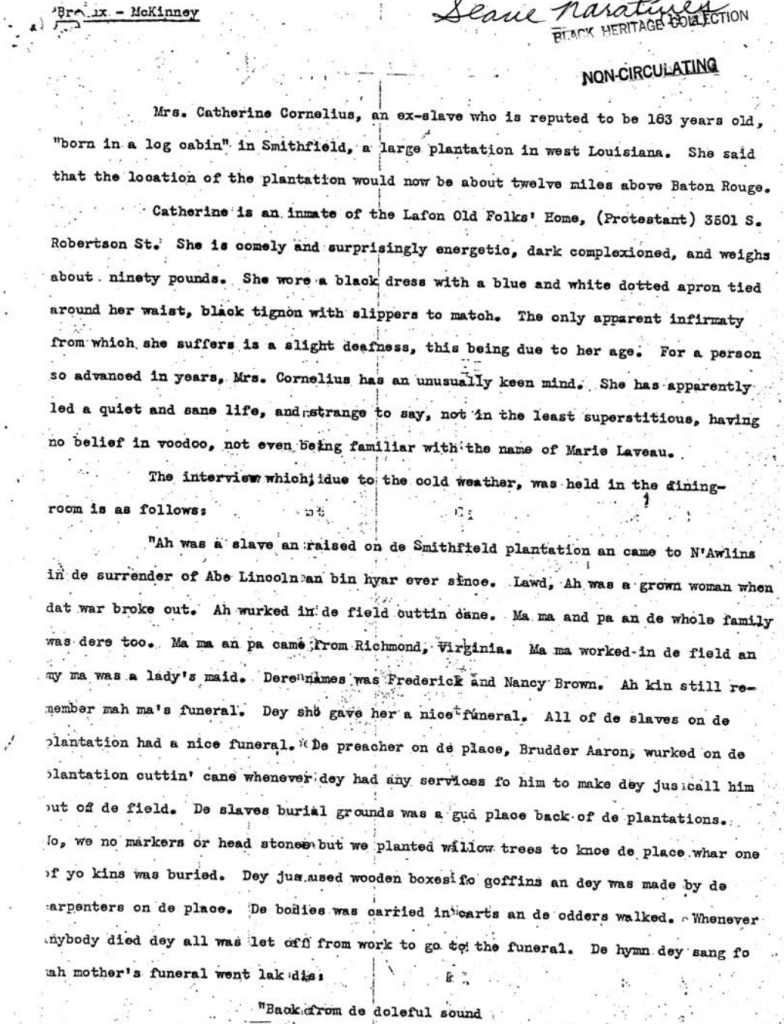
Mrs. Catherine Cornelius
The life experience of the former enslaved woman, Mrs. Catherine Cornelius, is one that is unique and reflects the non-homogeneous nature of slavery. Her testimony was conducted by the interviewer Breaux McKinney between the years of 1940-1949. At the time of the interview, Mrs. Catherine Cornelius was 103 and was able to give an oral account of her past. Throughout her interview, a confident tone is expressed, and she is described as a woman who is both ‘energetic’ and has a dark complexion. Her story is important because it demonstrates how enslaved people valued community and religion even amid chaos and uncertainty.
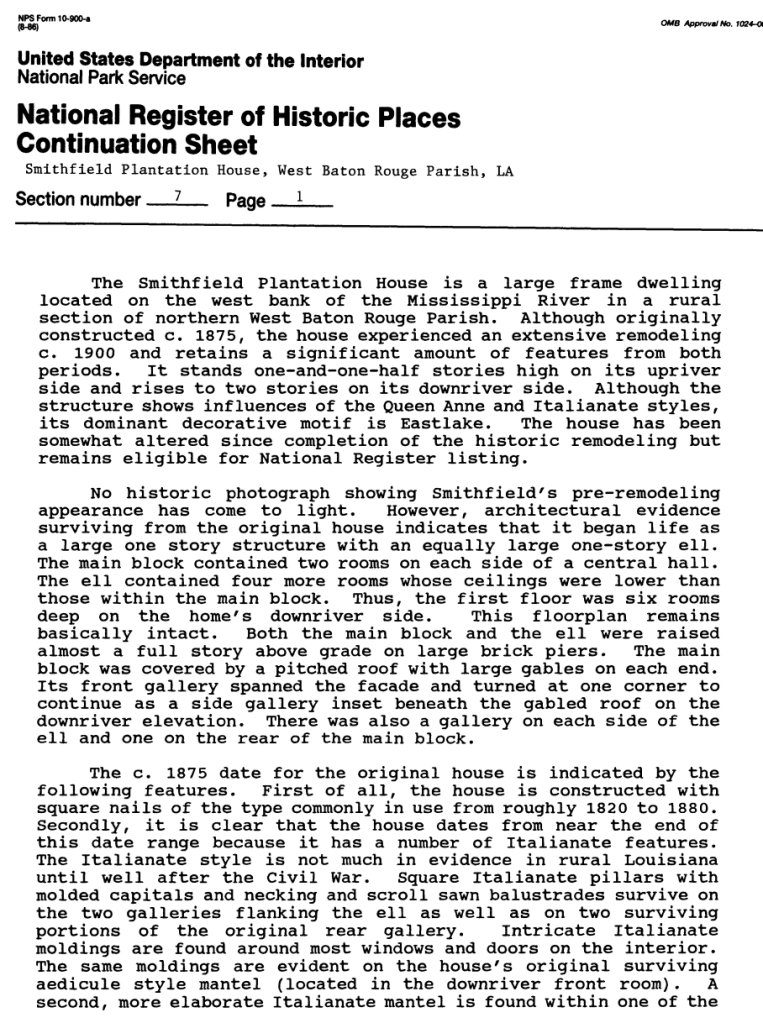
During her interview, she states that she was born in Louisiana, specifically in a cabin located on Smithfield Plantation. Based on archival research, Smithfield Plantation was located in the northern West Baton Rouge Parish near the Mississippi River. It is described as having an ‘Italianate’ architectural design that was built with square-shaped nails that were often commonly utilised during the 19th century. Interestingly, shortly after the American Civil War, this design was no longer prevalent. This plantation that she resided at was roughly 12 miles from Baton Rouge. Contextually, this is important because during the Antebellum period, plantation owners who owned a large number of enslaved men and women were a minority. In fact, in Louisiana, they made up only 0.1%, whilst the majority were non-slaveholders.
On the other hand, what is unique about Mrs. Catherine Cornelius’ enslaved experience is how she does not have an extensive length of negative situations that were imposed on her. For instance, during the interview, she exclaims how all the enslaved people on the plantation had food, clothes, and time to rest. Moreover, this suggests that her experience, along with the other enslaved Black men and women, was not as harsh. Therefore, this implies that there was a certain level of consideration, but not much information was given on whether it fluctuated for other enslaved people. But she does highlight a subtle setback that education and schools were not on the plantation, and if a special event occurred among the slaves, no one from the main house would join in. This suggests how slavery reinforced a social hierarchical system that established physical, mental, and emotional boundaries between the enslaved and the enslaver.
Historically, this is significant because it indicates that not all Planters had the same mentality when it came to managing their plantation. This is, of course, not to say exploitation never occurred. Rather, it may have differed on a case-by-case basis. Mrs. Catherine Cornelius does not give an outline of her day-to-day activities; rather, she claims two specific moments that are of deep significance to her. Firstly, she worked extensively cutting sugar on the Smithfield plantation. Corn and cotton were also in high demand. In turn, this implies how sugar was a major cash crop that boosted the labour and economy of the plantation. Secondly, though her parents, Frederick and Nancy Brown, were born in Richmond, Virginia, her mother, Nancy, was given a thoughtful funeral. Moreover, this narrative by Mrs. Catherine Cornelius provides us with an uncommon perspective on slavery.
Nancy Hall
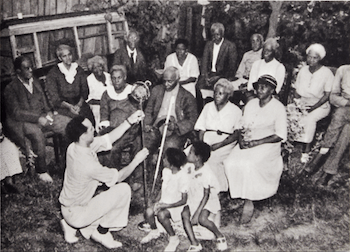
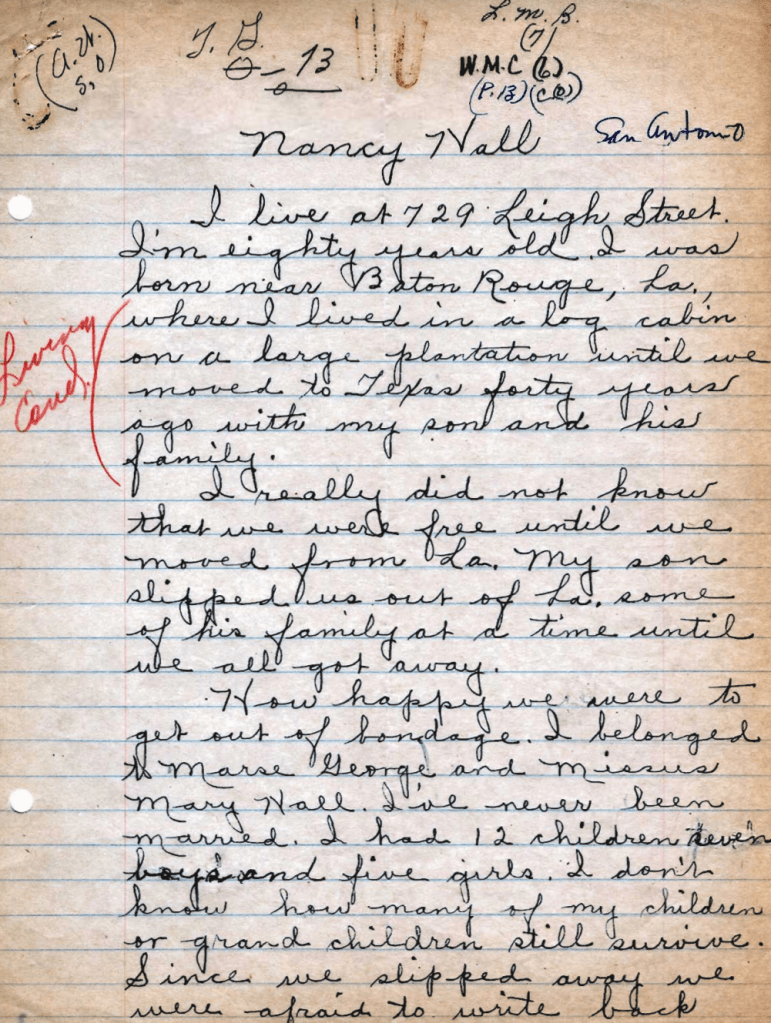
Taking a more alternative angle is Nancy Hall’s interview and how it greatly contrasts with Mrs. Catherine Cornelius’s unique narrative. This is significant because, during Nancy’s interview, there is no mention of the interviewer or the location where the interview was held suggesting a level of anonymity.
Nancy Hall stated that she was 80 years old during the interview and that she was born in Baton Rouge. She also acknowledges how she lived in a ‘log cabin’ on a quite large plantation before she moved with her son and his family. On a contextual note, log cabins were commonly occupied by enslaved people. After all, they were much more affordable to construct because they provided the minimum housing necessity that could accommodate other extended family members. This is important to consider because enslaved Black men and women in the Deep South were considered to be property. Therefore, planters attached their identity to the amount of physical labor they could exert. As a result, they were treated and viewed as inferior because their value was not tied to their humanity, but rather to how they could build the plantation economy thus accentuating white supremacist ideological structures. We can see this reflected in Nancy Hall’s testimony where she exclaims how she did not know that she was free until her son managed to move her out of Louisiana.
Nancy exemplifies that she has never been married before but has had 12 children over time. More specifically, seven boys and five girls, but she has no information regarding whether some of her children or grandchildren are alive during the interview. As a result, Nancy does not go into much depth about her owner other than her master was George Hall, and her Mistress was Mary Hall. Based on this information, Nancy Hall resided on Magnolia Mound Plantation. But we do gain insight into how she was classified as a field-hand who was treated in a dehumanizing way. She explains how she was forced to work from sunup to sundown down reflecting the physical and mental strain plantation life had on Black enslaved women.
Historically, this is significant because plantation owners and overseers wanted to create and justify a legacy of subjugation to prevent enslaved men and women from gaining actualization. Nancy recalls how her overseer would intentionally whip slaves as a manipulation tactic to instill fear in them and for his amusement. In turn, this explains why she recounts her most celebratory moment was when she was coming out of ‘bondage,’ due to these afflicting actions. Contextually, because this interview was conducted between the year of 1844-1865, which was during the Antebellum and Civil War period. Therefore, some enslavers may not have adequately revealed the information regarding emancipation, but it was a timely process.
John McDonald
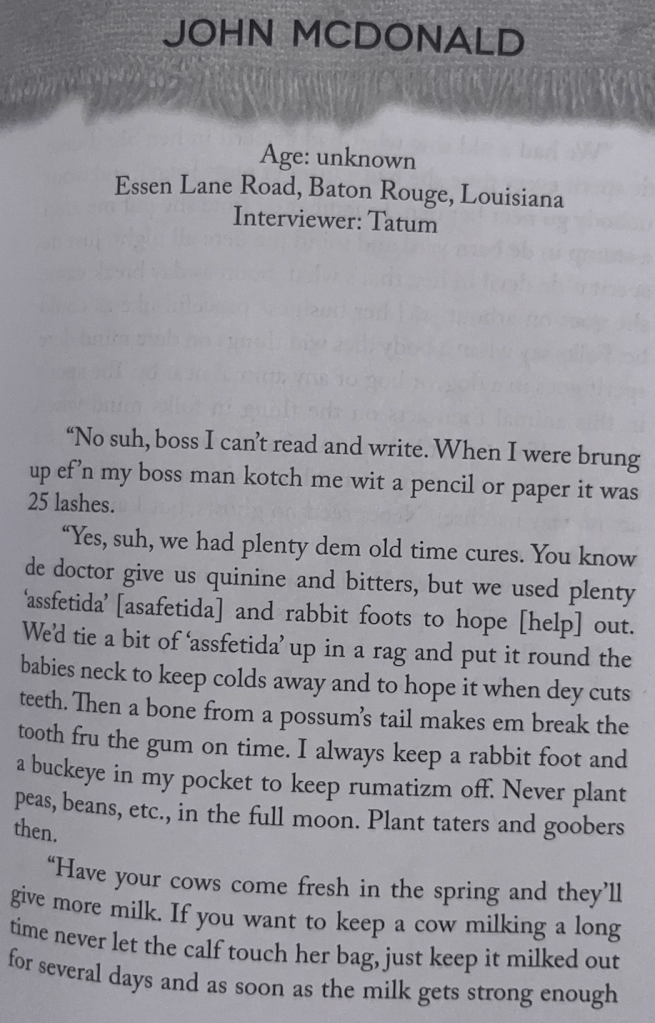
Finally, John McDonald’s former slave testimony builds curiosity. His interviewer was called Tatum but there was no information regarding his date of birth or age. The most important fact about him is that he is located within the Baton Rouge area.
During McDonald’s short interview, he explains how his master was against educating enslaved men and women. If any enslaved person was found trying to learn they would face ’25 lashes’ if caught unexpectedly. This corroborates with Louisiana and the Education legislature that was implemented between 1740 and 1834. These anti-literary laws were utilised to prevent the enslaved from gaining knowledge due to fears of a rebellion or revolt.
In turn, this narrative gives insight into how some interviewers may hold certain biases that prevent them from delving deeper into learning about the lives of the formerly enslaved. This is significant because this teaches us that when interviewing formerly enslaved people, several challenges will arise. For example, interviewers had to pre-collect and prepare a set of questions before the interview. In turn, this may have resulted in a power dynamic due to the potential of leading questions.
Concluding Thoughts
To conclude, it is clear that the legacy of enslavement is one that is vast and complicated, but also insightful. Each narrative serves a purpose to showcase how formerly enslaved people are not a monolithic group. Therefore, by reading their testimonies from the context in which they were recorded, it will enable us to see how the memory of the historical past is reflected in their legacy today. The impact that these testimonies will have today will allow for their experience to be validated, whilst considering how it affects the Black community in Louisiana. The intention of conveying their stories is so their voices can be shared publicly, not just through researching the archives, but to be implemented in history lessons and remembering how they helped build the U.S.
Sources Cited:
- Lynette Ater Tanner. 2014. Chained to the Land : Voices from Cotton & Cane Plantations : From Interviews of Former Slaves.
- Library of Congress. 2015. “Born in Slavery: Slave Narratives from the Federal Writers’ Project, 1936-1938.” The Library of Congress. 2015. https://www.loc.gov/collections/slave-narratives-from-the-federal-writers-project-1936-to-1938/about-this-collection/.
- Clayton, Ronnie W. 1990. Mother Wit.
- Folder #008. Cornelius, Catherine (Mrs.). (Ex-Slave Interview). Oral Histories, n.d. https://jstor.org/stable/community.31989339.
- Maddox, Carliss. 2022. “Literacy by Any Means Necessary: The History of Anti-Literacy Laws in the U.S – Oakland Literacy Coalition.” Oakland Literacy Coalition. January 12, 2022. https://oaklandliteracycoalition.org/literacy-by-any-means-necessary-the-history-of-anti-literacy-laws-in-the-u-s/.
- “ArchivEra: Portal.” 2025. Sydneyplus.com. 2025. http://7008.sydneyplus.com/final/Portal/SouthernUniversity.aspx?lang=en-US.
 Slavery in Baton Rouge